Sunday, December 22, 2019

Shelters for cold weather emergencies

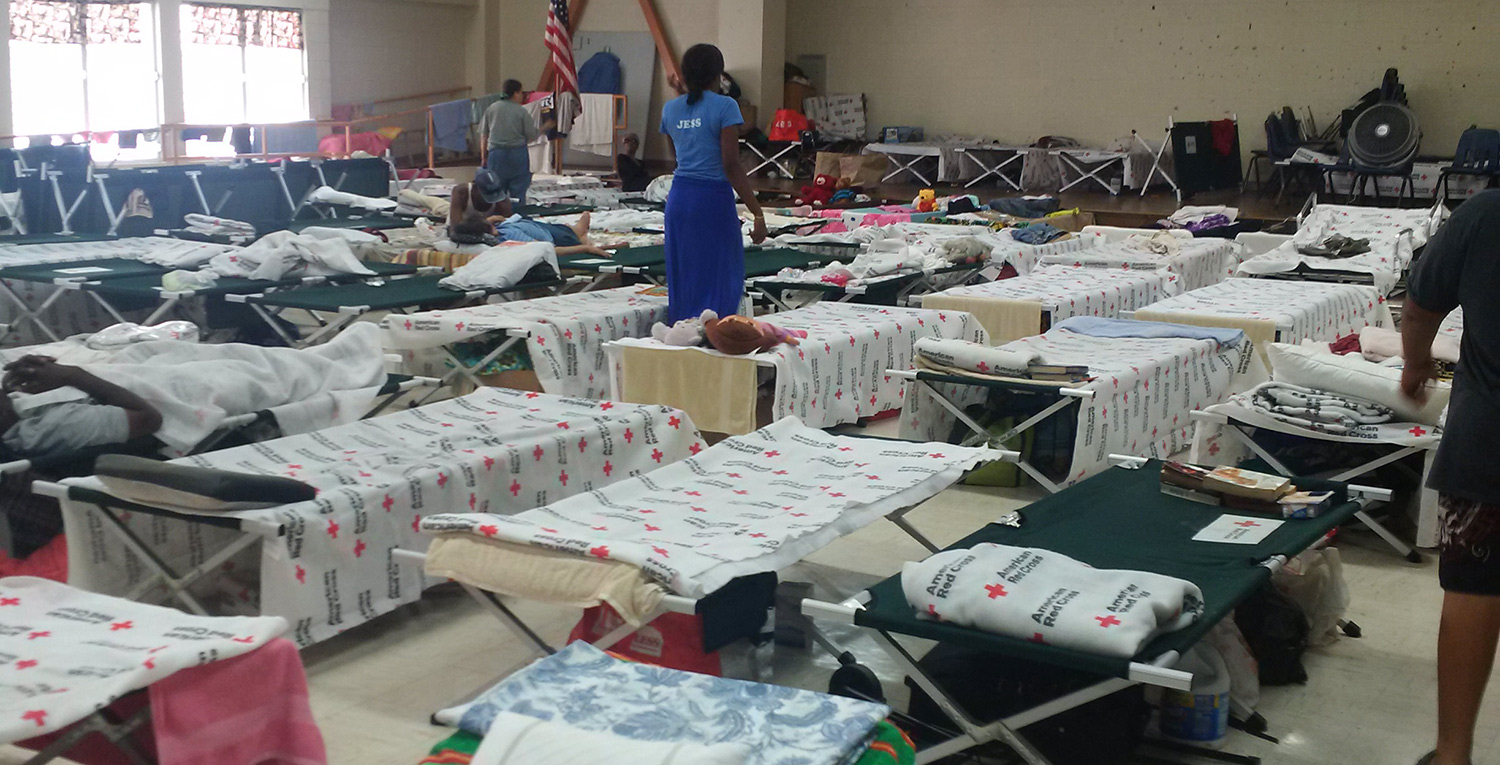
During severe cold, DC's Homeland Security & Emergency Management Agency (HSEMA) (a city-level version of FEMA) opens "warming centers" and emergency shelters, typically at schools & recreation centers. They're often managed by the Red Cross.

I've run a few, including one in Maryland during the "Snowmageddon" blizzard.

Monday, December 16, 2019

Tech tools in wilderness search and rescue

This Washington Post article is about lost person searches in the wilderness: "Lost in the wilderness: Tech tools help but they don’t always find someone in time"

Side note: There are volunteer search & rescue groups very similar to CERT, including some with trail-sniffing dogs or on horseback. I was a "ground pounder" myself. Most searches were for Alzheimer's patients, but we had lost hikers & missing kids too. 

I highly recommend the Wilderness First Aid (WFA) course offered by the National Outdoors Leadership School (NOLS), even if you won't use it in the wilderness.

Sunday, December 15, 2019

NZ volcano eruption and mass burn events


This week's issue of the EMR Infogram has a story on the horrific situation in New Zealand after a volcano eruption, and generally on handling mass casualty incidents involving burns. They recommend a U.S. Dept. of Health & Human Services guide on planning for mass burn events.

EMR Infogram, Dec. 12, 2019

Sunday, December 8, 2019

National survey on individual & community preparedness

Reposted from the U.S. Dept. of Health & Human Services (HHS):


"FEMA's National Household Survey on Individual and Community Preparedness finds more Americans are gathering supplies; talking to friends and family members; connecting with their communities; and taking other key actions to prepare for disasters. Check out the survey results to find out how individuals and communities across the country are becoming more prepared and learn about remaining preparedness gaps."

Assessing shelters' environmental health & safety

The CDC has released a tool for rapid assessment of environment health at disaster shelters.

via Emergency Managers Weekly Report

Saturday, June 22, 2019

Free apps to find the nearest AED for a heart attack

Pulsepoint apps show you on a map the closest locations of Automatic Electronic Defibrillators (AED). They currently have over 91,000 registered and you can add more you know about. The apps are free and available for Android & iOS.

AEDs are fully automatic and have voice prompts to lead you through. They are completely "idiot proof," and the extreme stress of the moment can make idiots of any of us. They aren't cheap though; typically $1,300 and up. Consider getting one if you can afford it. I got one for my parents at a 30% off sale, though I don't know how often those happen.

Keep your pets safe in an emergency

Here are ways to prepare for your pet in a disaster:

https://blogs.cdc.gov/publichealthmatters/files/2017/06/2Pet_Preparedness_Infographic-622x1024.jpg
🐶 Have a plan - This includes finding shelters or pet-friendly hotels nearby.

🐱 Make a kit.
  • Sufficient pet food for a week.
  • "Pet selfies "to help with reunification.
  • Leash or cage, including for pets you ordinarily wouldn'tuse them with. For example, you don't want a cat to run off.
  • Stress-relieving items, such as a toy.
  • Copies of vet (e.g., vaccination) records. Very important. For example, rabies is almost 100% fatal! Rescue workers and others need to know your pet has had its shots.
🐹 Consider microchipping your pet, and make sure its information is up-to-date.

🐦Get rescue alert stickers or decals to put near your front door and windows. This will let firefighters and rescue workers know there are animals inside. Available free from the ASPCA.

Wednesday, May 22, 2019

Homeowner’s and Renter’s Guide to Mold Cleanup After Disasters

From the CDC:


Was your home flooded? If so, and you were not able to dry your home (including furniture and other items) within 24-48 hours, you should assume you have mold growth.

You and your family should wait to re-enter your home until professionals tell you it is safe, with no structural, electrical or other hazards. Before you start cleanup activities, contact your insurance company and take pictures of the home and your belongings. Remember – drying your home and removing water-damaged items is your most important step for preventing mold damage.

 See the CDC site for more.

Monday, April 22, 2019

Attention Adults: You Need Vaccines Too!

Reposted from the CDC:

Vaccinations aren’t just for kids, so follow CDC’s immunization schedule for adults. Doing so can help keep you from getting sick and missing work or school.

As an adult, you are busy with life and have many responsibilities — but don’t forget to take care of yourself! Every year in the United States, thousands of adults become seriously ill and are hospitalized because of diseases that vaccines can help prevent. These diseases can be deadly for many adults. Make sure you are vaccinated for the best protection!


Monday, July 17, 2017

Flash Flooding


A tragic event: at least nine people were killed by a flash flood in Arizona. It was sunny with no sign of rain, but a storm upriver generated it.

Video

Here is advice from the National Weather Service:


On average, more people are killed by flooding than by any other single severe weather hazard, including tornadoes, lightning, and hurricanes. Most of these deaths occur at night, when it is more difficult to recognize flood dangers, and when people are trapped in vehicles.

Remember…

Saturday, February 15, 2014

ClusterFlake 2014

DisasterMan was in the South to witness "ClusterFlake" firsthand. In fairness to them:
  1. It wasn't the 2-3" of snow that was the problem. It was the ice that screwed up traffic.
  2. Significant snow is so rare there that it's not worth spending money on plows, sand trucks, and other things to prep for it.
  3. In Alabama, the forecasters really did get it wrong, saying it would fall farther south.
In Georgia, however, despite what the Governor claimed, the forecasters gave plenty of warning of where it would fall and how much. State and local officials just didn't listen. When the National Weather Service was saying to only travel in an emergency, why did they open the schools??

Anyway, it's easy to scoff at anyone farther south than you, but Japan has us all beat. You think you've got it rough? How about 50 feet of snow? Amazing pics here.

Wednesday, March 27, 2013

Raise Your Glass

Wine is not usually listed as a disaster kit item. It's notable, however, that before clean drinking water became widely available, it was safer to drink beer or wine, because the alchohol kills pathogens.

Also, a number of scientific studies have found that, in moderation, alchohol consumption can actually benefit health, wine in particular. And, of course, in a stressful situation like a disaster, its psychological benefit should not be underestimated. :-)

So, let's say you're in an emergency situation, and you don't have a supply on hand (or have already used it up). Who you gonna call?

Saturday, December 22, 2012

Breaking News

Todays' Washington Post Express

Monday, October 29, 2012

Sandy Twits

Today in the Twitter-verse:

     @lindsaylohan: WHY is everyone in SUCH a panic about hurricane (i'm calling it Sally)..? Stop projecting negativity! Think positive and pray for peace.

Oh wait, she and others have renamed it now:

    "It was nicknamed Hurricane Sassy during a Tyler Oakley twitcam on October 28, 2012 by Tyler Oakley, Alexander Gold, Lindsay Lohan, and Nikki Wood..."

More tweets:

Saturday, October 27, 2012

Frankenstorm

Hurricane Sandy is combining with another storm to become a much stronger “Frankenstorm.” For more info, click on the Storm Center tabs above.

While there’s real danger, some of the media have gone overboard with the hype. As one columnist put it, a Fox News meteorologist “went berserk,” saying “worst case scenario” three times, as well as “extensive, catastrophic damage”; “power outages that could last weeks for millions of people”; and “our mouths dropped at the latest tracking.”

Update: Kudos to Jim Vance, 40-year DC news anchor, for preaching it like it is:
"Lot of people are on the edge, or already over the edge, of being freaked out by this thing. There are ... good reasons to chill out and make the best of this:

"We ain't no punks up in here! We know bad weather. We dealt with Snowmaggedon, we handled the derecho, we survived Irene a few years back. Some of us remember Agnes, which was a mother of all storms. We're still here. We're still standing. As we will be after this one is a memory."
Getting back to the hype, here's a snarky version from The Weekly World News:

Monday, October 1, 2012

Rest in Peace. Please.

FEMA has declared October to be Zombie Awareness Month.

[Sigh.] I love the zombie genre, but it's been beaten to death. People have run out of new ideas. It's jumped the shark. Even using it to promote emergency preparedness was already done by the Center for Disease Control (CDC) almost a year and a half ago. It's just not fresh or clever anymore.

Maybe it's time to put a bullet in the head of the zombie genre and let it die.

Update:
Perhaps I spoke to soon. This video about CPR is well done and kinda funny.

Sunday, August 26, 2012

Bite Me

This is not the recommended way to carry a grenade.

      “Terrorism expert Chris Dobson called it 'a chilling indication of what our soldiers are up against.'”      

Call me crazy, but I'm not too worried about this guy.

Related posts: Idiot Terrorists

Source: Armed to the Teeth, The Sun (UK)

Monday, August 13, 2012

Big Bang Theory

A team of British physics students calculated the size of explosive needed to carry out the scenario in the movie Armageddon, in which an asteroid was blown apart to prevent it from hitting the Earth -- at the last minute, of course. They found it would take a 96 petaton bomb -- about two billion times more powerful than the largest nuke ever detonated. (It would take less to nudge one away from its path if it's done while it's farther away.)

NewsLI.com (Long Island) has advice on how to prepare for an asteroid "attack":

Tuesday, August 7, 2012

Disaster Could Be a Benefit — Sort Of

The Smithsonian Institute blog has an article title that's... unusual:

Italian Supervolcano Could End
Eurozone Crisis the Easy Way

Other news outlets highlight the fact that millions could be killed — but hey, let's look at the bright side!

Now if only the supervolcano under Yellowstone would blow, it could solve our problems! Why hasn't Obama thought of that?

Saturday, August 4, 2012

Search & Rescue: Nevermind

It's an all-hands callout! On a weekend, so I'm available!

ASRC FCO for 58yo female on Appalachian Trail north of Harpers Ferry. Ground resources needed for hasty searches and containment. All teams send avails. More details on the way.

10 minutes later...

Subj walked out of woods. All teams stand down.